
12 05, 2026

Core Capabilities that Differentiate High-Performing Metal Service Centers

2026-05-12T21:17:29+00:00May 12th, 2026|News Blog, NMC Media|

Key Takeaways:

  • Inconsistent metal processing and supply chain disruptions increase production risk. Variability in tolerances, lead times, and material quality can lead to scrap, delays, and unstable manufacturing output.
  • Precision processing and strong quality systems ensure reliable outcomes. High-performing service centers use tight tolerances, traceability, and compliance frameworks to maintain consistency and reduce downstream issues.
  • Scalable capacity and integrated supply chains stabilize production. Diversified sourcing, coordinated logistics, and aligned planning help maintain lead times and mitigate volatility.

Request a Quote with a Trusted Metal Service Center

A high-performing metal service center is defined by the core capabilities that support modern manufacturing demands. Procurement teams and engineers prioritize lead times, quality systems, capacity depth, and supply chain reliability when selecting a partner. Meanwhile, industrial metal supply chains face pressure from price volatility, evolving compliance standards, and shifting production schedules. As a result, service centers must operate as integrated supply chain partners rather than simple material suppliers. Understanding the technical capabilities that differentiate top-performing providers and the criteria is crucial for choosing the right project partner.

Operational Depth: Processing Capabilities That Support Real Production

High-performing metal service centers offer value-added services like slitting, cut-to-length, blanking, leveling, temper rolling, and surface preparation. Moreover, consistency under real production conditions sets them apart from standard warehouses.

Data from the U.S. Geological Survey shows steel is a key input across transportation, construction, energy, and defense manufacturing. As a result, processing precision and throughput reliability directly affect supply chain stability. Processing errors are amplified downstream, driving scrap, rework, and assembly delays.

MIT’s materials and construction curriculum highlights that variability in thickness, flatness, and edge quality dictates structural performance and manufacturability. By maintaining tight tolerances through calibrated equipment and documented process control, production risk is reduced for OEMs and fabricators.

Effective centers align processing schedules with customer production cycles. This synchronization enables just-in-time delivery, lowers inventory exposure, and optimizes material flow. Operational alignment turns theoretical capacity into reliable production output.

Quality Systems and Compliance: Verified Material Performance

Metal service center quality standards are a primary factor in procurement. Additionally, engineers and purchasing teams favor suppliers with documented quality systems, traceability protocols, and strict compliance frameworks.

In fact, the Metals Service Center Institute (MSCI) identifies standardized quality systems as a mechanism for performance consistency and supply chain reliability. Consequently, effective systems integrate inbound material verification, in-process inspection, lot traceability, and corrective action procedures.

Educational and regulatory sources reinforce this requirement. The Illinois State Board of Education shows how material compliance, mechanical properties, and surface characteristics determine manufacturing outcomes. High-performing steel service centers embed these technical specifications into inspection and certification workflows.

Service centers that maintain metallurgical testing capabilities, manage mill relationships, and communicate clearly during […]
5 02, 2026

Metal Processing Solutions: Integrating Steel and Aluminum for a Smarter Supply Chain

2026-02-10T19:01:10+00:00February 5th, 2026|News Blog, NMC Media|


Key Takeaways:

  • Separate steel and aluminum supply chains drive higher costs, inconsistent quality, and greater vulnerability to disruption.
  • Consolidating both materials under one metal processing partner streamlines logistics, standardizes quality, and reduces risk.
  • Partner with a company that provides integrated steel and aluminum metal processing solutions through strategic inventory, advanced equipment, and just-in-time supply chain expertise.

Enhance Your Projects with Expert Metal Processing Solutions

Metal processing solutions have rapidly shifted from a forward-thinking concept to an operational necessity as steel and aluminum have long been managed through separate, parallel supply chains. This siloed model, while once functional, is now associated with increased friction, cost, and risk across modern industrial operations. As industries such as automotive and advanced manufacturing are pushed to balance aluminum’s lightweight benefits with steel’s strength, this fragmented approach is becoming less sustainable. Moreover, growing emphasis on efficiency and supply chain resilience is being driven by OEM priorities looking toward 2026. Consequently, a unified approach to metal processing is being adopted to simplify logistics, improve manufacturing efficiency, and support a more resilient, integrated supply chain.

The Fragmentation Problem: Why Separate Steel and Aluminum Supply Chains Are Inefficient

In complex manufacturing operations, the supply chain is often treated as the central system through which performance is determined. When that system is fragmented, inefficiencies are amplified across operations and finances. As steel and aluminum are sourced from separate metal service centers, redundant freight costs, duplicated carrier negotiations, and multiple delivery schedules are introduced. Subsequently, inventory management is complicated, with separate buffers being maintained, higher capital being tied up, and facility footprints being expanded.

Meanwhile, quality and compliance risks are increased as separate QC standards, tolerances, and reporting systems are applied by each supplier. As a result, duplicated compliance efforts and greater part-to-part variability are encountered by OEMs. Furthermore, this fragmented approach is left highly exposed to volatility, where a single disruption can halt production. Although traditional procurement models were once relied upon, they are now being re-evaluated in favor of more resilient strategies. When steel and aluminum are positioned on separate logistical paths, exposure to disruptions, from port delays to mill-level constraints, is effectively doubled.

Strategic Advantages of an Integrated Metal Processing Partner

The solution to fragmentation is integration. When both steel processing and aluminum processing are consolidated under a single metal processing partner, risk is reduced and workflows are streamlined across the organization. In addition to simplified invoicing, logistics, expertise, resilience, and quality are strengthened through a unified approach.

  1. Streamlined Logistics and Cost Control

Logistics and cost control are enhanced. Freight is consolidated, transport costs are reduced, and […]

9 12, 2018

National Material Partner Taber Extrusions Shaping the Future of Aluminum Extrusions

2018-12-30T21:58:45+00:00December 9th, 2018|News Blog, NMC Media|

National Material L.P. and its metal service centers have a long history of quality and service dating back to 1964. Since its founding, N.M.L.P. has grown to over 30 business units and is now one of the largest suppliers of steel in America. The National Material group of industrial businesses consists of the Steel Group, Stainless and Alloys Group, Raw Material Trading Group, Aluminum Group, and Related Operations. Today, we tip our hat to Taber Extrusions, as we recognize this aluminum extrusion company for their expanded capabilities and flawless teamwork.

Taber Extrusions, located in Russellville, Arkansas is a highly regarded full-service provider of aluminum extrusions to a wide variety of industries including aerospace, transportation, defense, and thermal management. Taber has completed the relocation and start-up of the recently acquired micro-extrusion press lines. ISO 9001 and AS9100 certified, Taber’s present and future customers can expect to see increased supply opportunities with the expanded set of extrusion solutions, programs, and services.

“It’s about having all the different capabilities we can to meet the extrusion end users growing needs,” states Jason Weber, Taber Extrusions Vice President of Sales and Marketing, in a recent article by Light Metal Age Magazine. “One of the taglines we use is ‘Shaping Endless Possibilities.’ With the extensive variety of extruded shapes Taber produces—from micro-extrusions to wide profiles and everything in between—Taber embodies that message.”

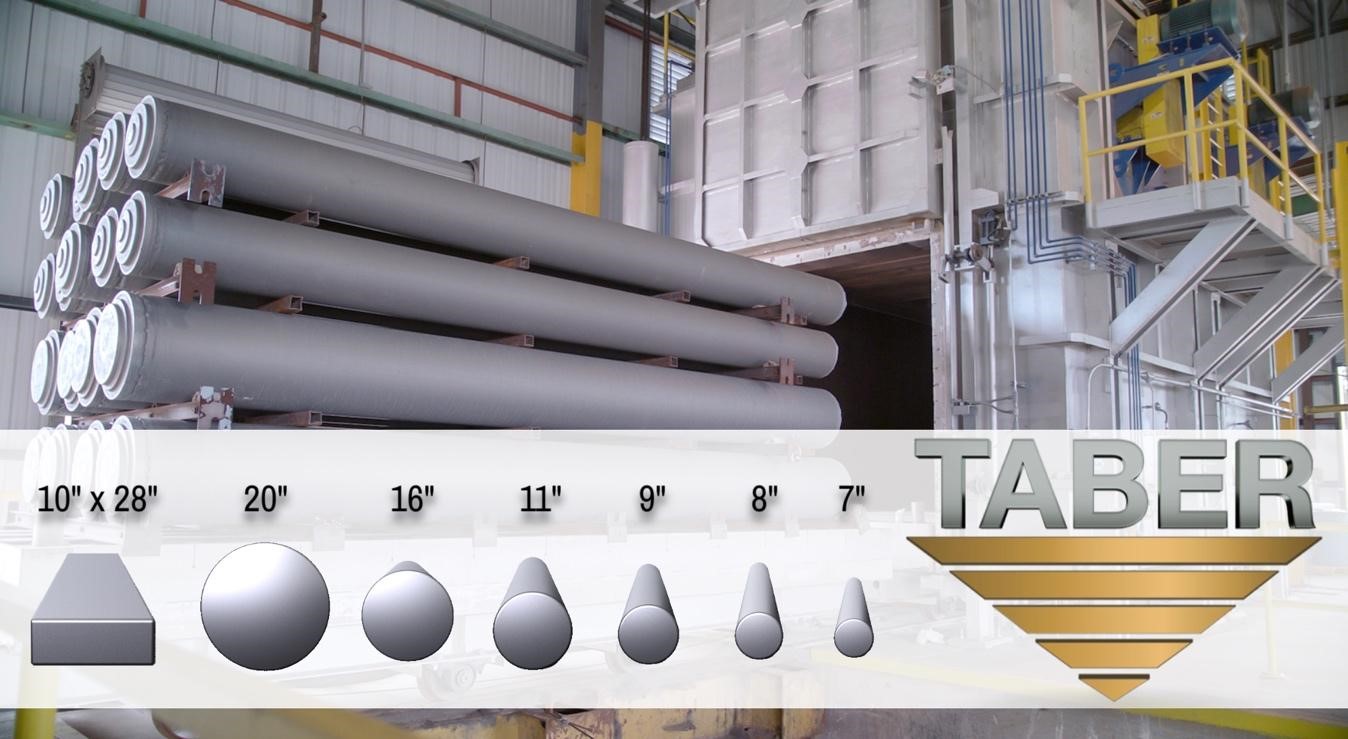
Taber Extrusion’s Gulfport casthouse in background with artistic overlay showing various sized billets.

This couldn’t be more true as Taber also announces the planned addition of 7” billet molds to Taber’s existing extrusion billet casting facility in Gulfport, MS. Taber’s addition of the 7” molds further enhances Taber’s existing offering of extruded aluminum billet products to Taber’s newly refurbished Gulfport Casthouse. 7” extrusion log will be available for delivery beginning in January 2019.

The addition of the 7” molds complements the existing 8”, 9”, 11”, 16”, and 20” diameter molds. The various diameters of extrusion billet will be available in 6063 and 6061 alloy chemistries as well as specialized chemistries upon request. “Taber is excited to offer extrusion logs to our fellow extruders,” adds Weber. The Gulfport Casthouse is uniquely situated with port access as well as easy access to industrial scrap. These input factors coupled with the recently refurbished casting equipment with the LARS® in-line degassing and purification system supplies billet chemistries and consistencies which rival those of larger billet producers.

If you have any questions please visit taberextrusions.com or contact one of Taber’s Regional Sales Managers.

Follow Taber Extrusions
LINKEDIN: https://www.linkedin.com/company/taberextrusions/
FACEBOOK: https://www.facebook.com/taberextrusions/
TWITTER: https://twitter.com/taberextrusions

Looking for a partner as strong as you are?

Founded in 1964, National Material Company L.P. offers 50+ years of leadership in supplying, processing and servicing the metal manufacturing needs of diverse industries. With processing facilities and service centers in the U.S. and Mexico, NMC is strategically located to deliver its substantial capabilities.

Go to Top